

Every day we make decisions based on fragments of information. A headline. A conversation. A comment online. A moment observed from a single perspective.
We form opinions, make judgements and move on, often without considering what might be missing.
Most of the time, those decisions feel insignificant.
But what happens when they aren’t?
The stories that interest me begin with questions like these. Not questions about distant futures or impossible technologies, but about ordinary people, everyday choices and the consequences that can follow when assumptions go unchallenged.
I’m fascinated by the way people interact with the world around them. The systems they trust. The information they consume. The perspectives they accept. The things they overlook.
Rather than offering answers, I prefer to explore the questions. To take a familiar situation and follow it a little further than most people would. To look beyond what is immediately visible and examine the consequences that might otherwise go unnoticed.
The stories that interest me begin with questions like these. Not questions about distant futures or impossible technologies, but about ordinary people, everyday choices and the consequences that can follow when assumptions go unchallenged.
I’m fascinated by the way people interact with the world around them. The systems they trust. The information they consume. The perspectives they accept. The things they overlook.
Rather than offering answers, I prefer to explore the questions. To take a familiar situation and follow it a little further than most people would. To look beyond what is immediately visible and examine the consequences that might otherwise go unnoticed.
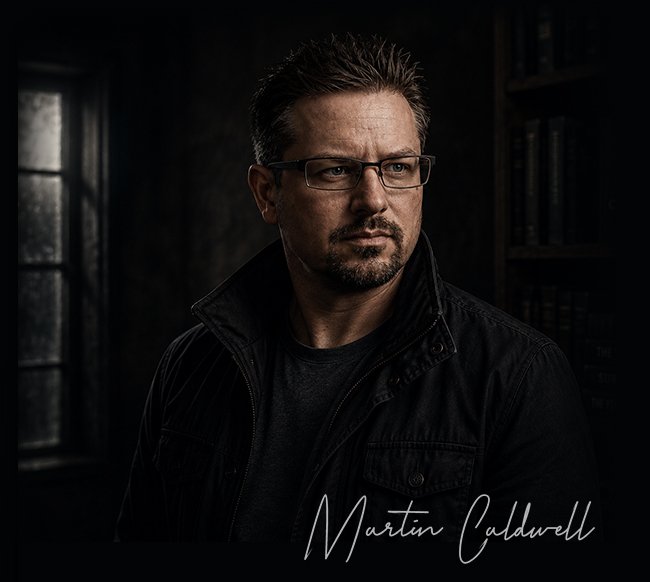
Martin Caldwell is a British author of psychological thrillers that explore the hidden consequences of everyday decisions, modern systems and the assumptions people rarely stop to question.
Drawing on experience working in technology, digital safety and neurodiversity, his stories are rooted in plausible realities and shaped by a fascination with human behaviour. Rather than focusing on impossible futures or larger-than-life villains, Martin’s novels examine how ordinary people respond when familiar situations take unexpected and unsettling turns.
His writing is driven by observation, research and a desire to look beyond the obvious. Whether exploring the impact of online behaviour, the influence of surveillance, or the consequences of acting on incomplete information, his stories aim to entertain while encouraging readers to see the world from a different perspective.
Living with both Autism and ADHD has also influenced the way Martin approaches storytelling, often leading him to question assumptions, notice overlooked details and explore ideas from multiple angles.
His novels are written for readers who enjoy believable stories, complex questions and the uncomfortable possibility that the most unsettling ideas are often the ones closest to reality.
Martin Caldwell is a British author of psychological thrillers that explore the hidden consequences of everyday decisions, modern systems and the assumptions people rarely stop to question.
Drawing on experience working in technology, digital safety and neurodiversity, his stories are rooted in plausible realities and shaped by a fascination with human behaviour. Rather than focusing on impossible futures or larger-than-life villains, Martin’s novels examine how ordinary people respond when familiar situations take unexpected and unsettling turns.
His writing is driven by observation, research and a desire to look beyond the obvious. Whether exploring the impact of online behaviour, the influence of surveillance, or the consequences of acting on incomplete information, his stories aim to entertain while encouraging readers to see the world from a different perspective.
Living with both Autism and ADHD has also influenced the way Martin approaches storytelling, often leading him to question assumptions, notice overlooked details and explore ideas from multiple angles.
His novels are written for readers who enjoy believable stories, complex questions and the uncomfortable possibility that the most unsettling ideas are often the ones closest to reality.
Martin Caldwell is a British author of psychological thrillers that explore the hidden consequences of everyday decisions, modern systems and the assumptions people rarely stop to question.
Drawing on experience working in technology, digital safety and neurodiversity, his stories are rooted in plausible realities and shaped by a fascination with human behaviour. Rather than focusing on impossible futures or larger-than-life villains, Martin’s novels examine how ordinary people respond when familiar situations take unexpected and unsettling turns.
His writing is driven by observation, research and a desire to look beyond the obvious. Whether exploring the impact of online behaviour, the influence of surveillance, or the consequences of acting on incomplete information, his stories aim to entertain while encouraging readers to see the world from a different perspective.
Living with both Autism and ADHD has also influenced the way Martin approaches storytelling, often leading him to question assumptions, notice overlooked details and explore ideas from multiple angles.
His novels are written for readers who enjoy believable stories, complex questions and the uncomfortable possibility that the most unsettling ideas are often the ones closest to reality.
Many of the stories I write begin with the same fascination.
The systems people live within every day and the choices they make without thinking twice.
Most of those choices seem insignificant at the time. A decision. An assumption. A rule followed because it’s always been there. Yet small actions can have consequences far beyond what anyone expects.
What interests me isn’t the event itself. It’s what sits beneath it.
The assumptions people make. The information they don’t have. The choices they make with the best intentions. The consequences that emerge long after the moment has passed.
Whether a story touches on social media, surveillance, artificial intelligence or something else entirely, those elements are never the destination. They are simply the starting point for exploring how people think, behave and respond when their understanding of a situation begins to change.
Every story is grounded in research and built around situations that feel believable. I want readers to recognise the world they’re stepping into, even when the events themselves become increasingly unsettling.
Above all, I believe stories should entertain. They should keep readers turning pages, invested in the characters and eager to discover what happens next. But if, after finishing a book, a reader finds themselves looking at something a little differently than they did before, then the story has achieved something more.
Not by providing answers. But by asking questions worth thinking about.
Many of the stories I write begin with the same fascination.
The systems people live within every day and the choices they make without thinking twice.
Most of those choices seem insignificant at the time. A decision. An assumption. A rule followed because it’s always been there. Yet small actions can have consequences far beyond what anyone expects.
What interests me isn’t the event itself. It’s what sits beneath it.
The assumptions people make. The information they don’t have. The choices they make with the best intentions. The consequences that emerge long after the moment has passed.
Whether a story touches on social media, surveillance, artificial intelligence or something else entirely, those elements are never the destination. They are simply the starting point for exploring how people think, behave and respond when their understanding of a situation begins to change.
Every story is grounded in research and built around situations that feel believable. I want readers to recognise the world they’re stepping into, even when the events themselves become increasingly unsettling.
Above all, I believe stories should entertain. They should keep readers turning pages, invested in the characters and eager to discover what happens next. But if, after finishing a book, a reader finds themselves looking at something a little differently than they did before, then the story has achieved something more.
Not by providing answers. But by asking questions worth thinking about.
Many of the stories I write begin with the same fascination.
The systems people live within every day and the choices they make without thinking twice.
Most of those choices seem insignificant at the time. A decision. An assumption. A rule followed because it’s always been there. Yet small actions can have consequences far beyond what anyone expects.
What interests me isn’t the event itself. It’s what sits beneath it.
The assumptions people make. The information they don’t have. The choices they make with the best intentions. The consequences that emerge long after the moment has passed.
Whether a story touches on social media, surveillance, artificial intelligence or something else entirely, those elements are never the destination. They are simply the starting point for exploring how people think, behave and respond when their understanding of a situation begins to change.
Every story is grounded in research and built around situations that feel believable. I want readers to recognise the world they’re stepping into, even when the events themselves become increasingly unsettling.
Above all, I believe stories should entertain. They should keep readers turning pages, invested in the characters and eager to discover what happens next. But if, after finishing a book, a reader finds themselves looking at something a little differently than they did before, then the story has achieved something more.
Not by providing answers. But by asking questions worth thinking about.
Ideas can come from almost anywhere.
A conversation. A place. A news story. A piece of technology. A behaviour that seems perfectly normal until you stop and look at it more closely.
Most of my stories begin with a question.
Not necessarily a question that has an answer, but one that refuses to be ignored. What would happen if? Why do people react this way? What changes when a familiar situation is taken one step further? Not every idea becomes a novel.
Before committing to a story, I spend time exploring its central question, testing different possibilities and seeing whether it continues to hold my attention. Some ideas stay for days, others for years. Before any writing begins, I spend a great deal of time researching, planning and questioning the idea itself. Every story is built around situations that feel believable, even when the consequences become increasingly unsettling. Whether it’s understanding how a technology works, visiting a location, researching procedures or exploring the psychology behind a character’s actions, the goal is always the same: to create a world that feels real.
As the story develops, characters, motivations and key turning points begin to emerge. I gradually build the structure, following the consequences of decisions and asking how each choice affects what comes next. By the time I begin writing, I already have a strong understanding of the world, the people within it and the questions I want to explore.
For me, a story is only worth pursuing if the question at its centre remains compelling long after the initial idea appears. If it continues to make me think, challenge assumptions and spark new possibilities, then it’s usually a story worth telling.
Because while plots may draw readers in, it’s often the questions behind them that stay long after the final page.
Ideas can come from almost anywhere.
A conversation. A place. A news story. A piece of technology. A behaviour that seems perfectly normal until you stop and look at it more closely.
Most of my stories begin with a question.
Not necessarily a question that has an answer, but one that refuses to be ignored. What would happen if? Why do people react this way? What changes when a familiar situation is taken one step further? Not every idea becomes a novel.
Before committing to a story, I spend time exploring its central question, testing different possibilities and seeing whether it continues to hold my attention. Some ideas stay for days, others for years. Before any writing begins, I spend a great deal of time researching, planning and questioning the idea itself. Every story is built around situations that feel believable, even when the consequences become increasingly unsettling. Whether it’s understanding how a technology works, visiting a location, researching procedures or exploring the psychology behind a character’s actions, the goal is always the same: to create a world that feels real.
As the story develops, characters, motivations and key turning points begin to emerge. I gradually build the structure, following the consequences of decisions and asking how each choice affects what comes next. By the time I begin writing, I already have a strong understanding of the world, the people within it and the questions I want to explore.
For me, a story is only worth pursuing if the question at its centre remains compelling long after the initial idea appears. If it continues to make me think, challenge assumptions and spark new possibilities, then it’s usually a story worth telling.
Because while plots may draw readers in, it’s often the questions behind them that stay long after the final page.
Ideas can come from almost anywhere.
A conversation. A place. A news story. A piece of technology. A behaviour that seems perfectly normal until you stop and look at it more closely.
Most of my stories begin with a question.
Not necessarily a question that has an answer, but one that refuses to be ignored. What would happen if? Why do people react this way? What changes when a familiar situation is taken one step further? Not every idea becomes a novel.
Before committing to a story, I spend time exploring its central question, testing different possibilities and seeing whether it continues to hold my attention. Some ideas stay for days, others for years. Before any writing begins, I spend a great deal of time researching, planning and questioning the idea itself. Every story is built around situations that feel believable, even when the consequences become increasingly unsettling. Whether it’s understanding how a technology works, visiting a location, researching procedures or exploring the psychology behind a character’s actions, the goal is always the same: to create a world that feels real.
As the story develops, characters, motivations and key turning points begin to emerge. I gradually build the structure, following the consequences of decisions and asking how each choice affects what comes next. By the time I begin writing, I already have a strong understanding of the world, the people within it and the questions I want to explore.
For me, a story is only worth pursuing if the question at its centre remains compelling long after the initial idea appears. If it continues to make me think, challenge assumptions and spark new possibilities, then it’s usually a story worth telling.
Because while plots may draw readers in, it’s often the questions behind them that stay long after the final page.
No matter what question sits at the heart of a novel, it has to work as a story before anything else. The characters need to feel real, the stakes need to matter and the pages need to keep turning. If a reader isn’t invested in what happens next, then the underlying ideas have little chance to make an impact.
While my books often explore contemporary themes and uncomfortable questions, they are never intended as lectures or warnings. My goal isn’t to tell readers what to think. It’s to place believable characters in compelling situations and allow the consequences of their decisions to unfold naturally.
Many of the worlds I write about are familiar. The places, technologies, behaviours and systems already exist around us in one form or another. What interests me is exploring what happens when those everyday realities are pushed just a little further than we might expect.
I hope readers finish my books feeling entertained first and foremost. But if a story lingers afterwards, if a scene resurfaces unexpectedly or a familiar situation suddenly looks a little different, then perhaps the questions behind the story have done their job.
No matter what question sits at the heart of a novel, it has to work as a story before anything else. The characters need to feel real, the stakes need to matter and the pages need to keep turning. If a reader isn’t invested in what happens next, then the underlying ideas have little chance to make an impact.
While my books often explore contemporary themes and uncomfortable questions, they are never intended as lectures or warnings. My goal isn’t to tell readers what to think. It’s to place believable characters in compelling situations and allow the consequences of their decisions to unfold naturally.
Many of the worlds I write about are familiar. The places, technologies, behaviours and systems already exist around us in one form or another. What interests me is exploring what happens when those everyday realities are pushed just a little further than we might expect.
I hope readers finish my books feeling entertained first and foremost. But if a story lingers afterwards, if a scene resurfaces unexpectedly or a familiar situation suddenly looks a little different, then perhaps the questions behind the story have done their job.
No matter what question sits at the heart of a novel, it has to work as a story before anything else. The characters need to feel real, the stakes need to matter and the pages need to keep turning. If a reader isn’t invested in what happens next, then the underlying ideas have little chance to make an impact.
While my books often explore contemporary themes and uncomfortable questions, they are never intended as lectures or warnings. My goal isn’t to tell readers what to think. It’s to place believable characters in compelling situations and allow the consequences of their decisions to unfold naturally.
Many of the worlds I write about are familiar. The places, technologies, behaviours and systems already exist around us in one form or another. What interests me is exploring what happens when those everyday realities are pushed just a little further than we might expect.
I hope readers finish my books feeling entertained first and foremost. But if a story lingers afterwards, if a scene resurfaces unexpectedly or a familiar situation suddenly looks a little different, then perhaps the questions behind the story have done their job.
The questions behind a story don’t always end on the final page.
Get updates on new releases, upcoming projects and occasional behind-the-scenes insights.
No spam. Unsubscribe at any time.